Current lesson · 1 of 8
Electrical Safety Fundamentals
12 min read
Learning objective
By the end of this lesson you can identify common electrical hazards and apply fundamental safety rules to prevent accidents in industrial settings.
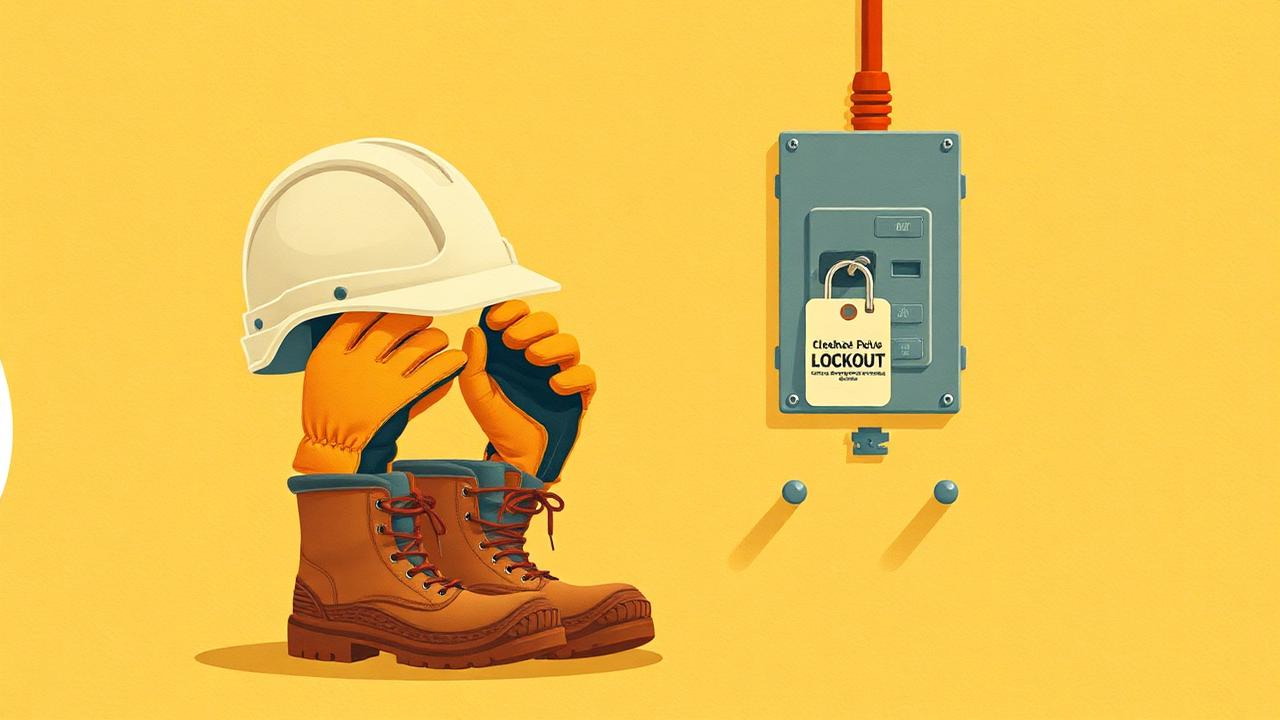

Electrical Safety Fundamentals
Welcome. In this lesson we will cover electrical safety fundamentals. It takes about 12 min.
Try it yourself
45% · Steady
Voices are generated once, then kept on your phone. Replays use no data.
Working with electricity is dangerous. One mistake can cause death, fire, or permanent injury. The rules are simple and must never be broken: (1) Always turn off power at the main breaker before working on any circuit. (2) Verify with a multimeter that the power is truly off — never trust a switch alone. (3) Wear insulated gloves and rubber-soled shoes. (4) Never work on electrical systems in wet conditions or with wet hands. (5) Use insulated tools with safety markings.
In industrial settings (factories, mines, construction sites), voltages are higher and dangers are greater. A 240V household shock is painful; a 11,000V industrial shock is lethal. Lockout/tagout procedures ensure that when you turn off power to work on a machine, no one else can turn it back on until you finish. This procedure — locking the breaker with your personal padlock — has saved countless lives.
Diagrams for this lesson
Download them to study on paper, away from the phone.
Voltage is measured across a component. Current is measured in the line. Continuity is only tested with the power off.
Series adds voltage and keeps current. Parallel adds current and keeps voltage. Two 12 V / 5 A panels give 24 V / 5 A or 12 V / 10 A.
Practice question
What should you do AFTER turning off the main breaker before working on a circuit?